
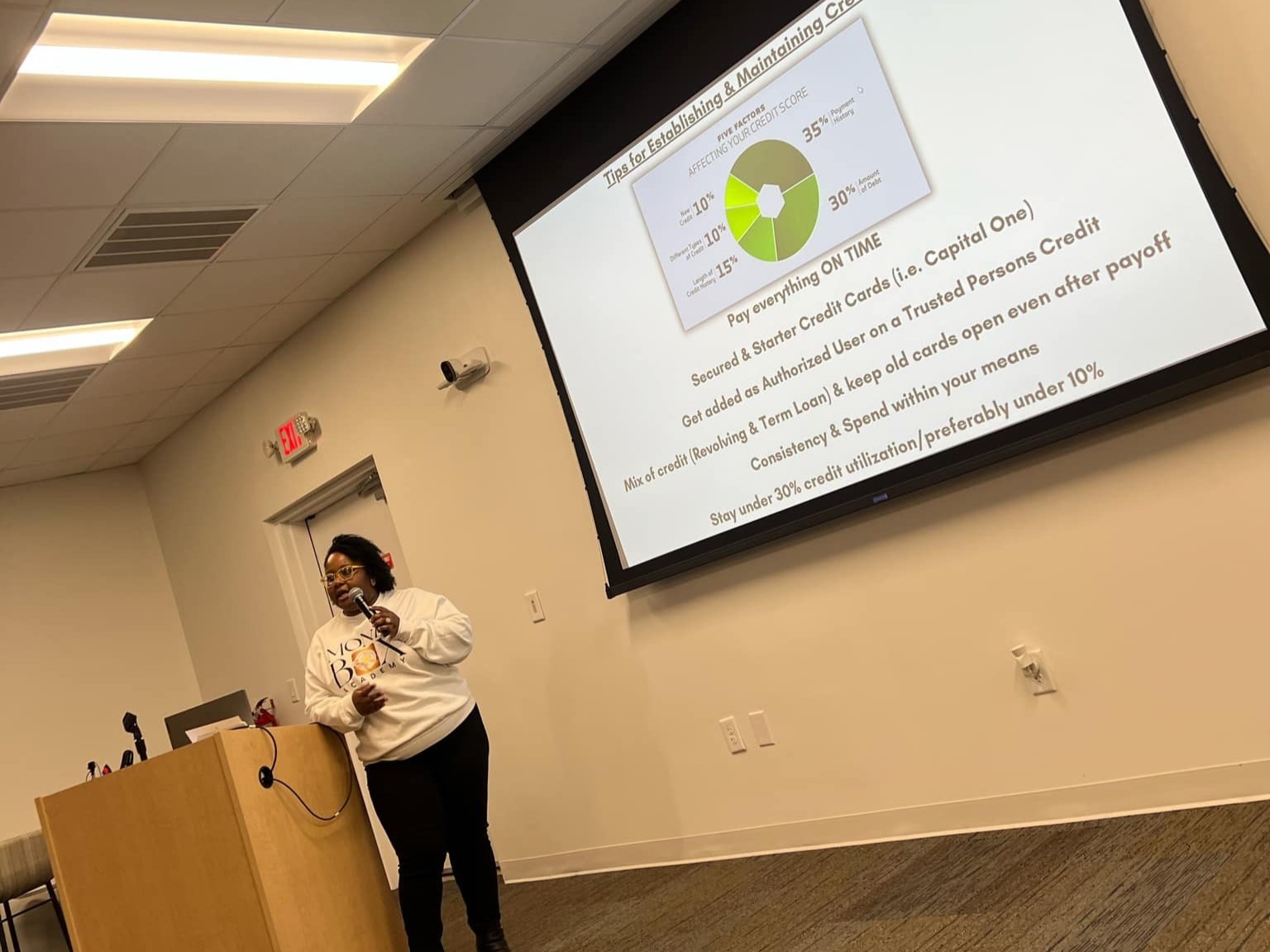
In a world where financial literacy is often overlooked, NC financial wellness programs are emerging as life-changing initiatives—especially when grounded in community. At Moneybox, we believe that effective financial wellness is built with empathy, inclusion, and real, measurable impact. Our community-based model is designed to empower North Carolinians to overcome financial barriers and achieve lasting confidence in money matters.
Why Community-Based NC Financial Wellness Programs Work
Tailored to Local Needs
Successful NC financial wellness programs recognize that each county and community in North Carolina faces unique financial challenges—whether it’s rural access to banking, language barriers, or financial exclusion. That’s why community-based models are impactful; they adapt resources and education to address specific local needs.
Trust and Cultural Competence
When financial wellness is delivered by familiar local institutions—credit unions, Extension services, nonprofits—trust and engagement rise. For example, the Latino Community Credit Union (LCCU) in Durham began as a response to the Latino community’s exclusion from traditional banking due to language or documentation barriers. This trust paved the way for impactful programs like financial literacy workshops and the “Building a Better Future” series, which has graduated hundreds of participants.
Real Models Driving Change in NC Financial Wellness
NC State Cooperative Extension: Financial Wellness Programs
The N.C. Cooperative Extension, particularly at the Guilford County Center, runs a standout NC financial wellness program. Their offerings span essential financial topics—budgeting, savings, credit, debt, retirement, fraud prevention, and more—delivered in both English and Spanish to ensure inclusivity. Through workshops and resources, they’re empowering individuals and families to achieve financial resiliency.
Individual Development Accounts (IDAs)
North Carolina’s network of Individual Development Account (IDA) programs helps low-income residents save toward big goals—like owning a home or growing a small business. Across 55 NC counties, 32 local IDA sites support over 500 account holders with savings matched at a 1:2 rate. Participants engage in financial training, develop savings plans, and ultimately leverage matched funds toward asset-building goals. These IDAs are hallmarks of community-centered financial wellness.
Self-Help Credit Union & Center for Responsible Lending
Founded in Durham, the Self-Help Credit Union (now part of the Center for Community Self-Help) has provided billions in loans for individuals, families, and small businesses since 1980, especially to underserved markets (Wikipedia). Its advocacy arm, the Center for Responsible Lending (CRL), addresses predatory lending and helps shape fair policy—crucial for preventing financial hardship.
The Support Center (TSC)
Based in Raleigh, The Support Center (formerly NC Minority Support Center) partners with community credit unions and organizations to provide not just lending services but technical assistance, grant writing, training, and capital support to underserved communities (Wikipedia). Their collaborative, community-first approach strengthens local financial institutions and drives extended financial wellness.
NC Financial Literacy Council
The North Carolina Financial Literacy Council provides financial tools, resources, and outreach across the state—covering budgeting, saving, investing, and borrowing. For example, in 2024 the Council spotlighted budgeting through their “Financial Fridays Newsletter.” They also extend consumer protection by sharing guidance on fraud awareness and future education initiatives.
Our Community-Based Model at Moneybox
Drawing inspiration from these proven NC financial wellness programs, Moneybox has crafted a community-centered model that blends digital convenience with local reach:
Local Partnerships
We’re forging alliances with NC community institutions—credit unions, Extension centers, nonprofits, and local educators—to co-create workshops and resources, ensuring cultural relevance and accessibility.
Inclusive Programming
Our workshops cover budgeting, saving, credit health, retirement, fraud prevention, and mental-financial wellness—reflecting both NC Cooperative Extension’s inclusive offerings and NC Literacy Council’s education mandates. We’re launching bilingual content (English/Spanish) to reduce barriers.
Matched Savings Initiatives
Inspired by the IDA model, we provide matched-savings incentives for targeted groups—students, first-time homeowners, small business entrepreneurs—nurturing momentum and long-term financial planning.
Advocacy & Policy Collaboration
Following the footsteps of Self-Help CU and CRL, we partner on research, local policy dialogues, and advocacy—aligned with consumer protection and financial justice.
Trusted Local Hubs
By embedding our model into local settings—e.g., community centers and university campuses—we build trust and physical touchpoints for financial guidance, similar to how Self-Help and The Support Center leverage local institutions.
Why This Works: Real Impacts from NC Community-Based Programs
Greater Reach and Engagement
Community-based initiatives tend to attract more participants due to trust, relevance, and convenience. The LCCU’s workshops and IDA graduations are just the beginning of how localized outreach changes lives.
Measurable Progress
The IDA program’s matched savings deliver tangible results—participants walk away with financial growth, knowledge, and a sense of empowerment.
Policy-Level Change
Self-Help CU and CRL’s advocacy helped shape foundational reforms—like the NC Predatory Lending Law—preventing financial exploitation and safeguarding hundreds of thousands of residents (Wikipedia).
Inclusive Access
By offering multilingual education and serving diverse audiences—from students to seniors—programs like those by NC Extension and others help close gaps in financial inclusion.
Guiding Principles of Our Model
To ensure effective, compassionate, and scalable NC financial wellness programs, we embrace these core principles:
- Local Relevance: Tailor education and tools to the financial realities of each NC community.
- Trust and Accessibility: Partner with trusted institutions; offer bilingual and free resources.
- Tangible Incentives: Use matched savings and milestones to motivate and support behavior change.
- Educational Rigor + Practical Skills: Blend curriculum with hands-on workshops and digital aids.
- Advocacy Aligned with Communities: Inform and influence financial policy grounded in local voice and evidence.
- Measurable Outcomes: Track participation, savings growth, credit improvements, and confidence gains.
Sample Programs in Action: Bringing It Home
1. Budget & Build Workshop Series
- Partners: NC Cooperative Extension, local libraries
- Focus: Budgeting basics, saving goals, credit health
- Incentive: Small matched savings ($50) toward community bank or credit union account after completion
2. Student Financial Wellness Weeks
- Partners: NC universities (e.g., NC State)
- Offerings: LIT™-style micro-lessons, webinars on student loans, budgets, career finances
- Goal: Build financial confidence before graduation
3. Minority Small Business Match Fund
- Partners: The Support Center, Self-Help CU
- Offerings: Training + matched seed funds to microbusinesses in underserved sectors
- Impact Goal: Breathe entrepreneurial life into diverse communities
4. Rural IDA Expansion Across NC
- Partners: Local nonprofits, USDA outreach
- Offerings: Savings matching, financial education, asset acquisition support
- Result: Expand proven IDA impact—over 500 participants already served (Wikipedia)
5. Community Fraud & Scam Awareness Campaign
- Partners: NC Department of Justice, NC Financial Literacy Council
- Offerings: In-person sessions, online campaigns, fraud helpline access
- Aim: Protect vulnerable populations via education and real-time support
Measuring Success: KPIs That Matter
To track the effectiveness of our NC financial wellness programs, we monitor:
- Program attendance and demographic reach
- Changes in savings and reduced debt levels
- Improved credit scores or reduced predatory lending exposure
- Behavioral shifts—e.g., budgeting habits, use of financial tools
- Policy influence and advocacy outcomes
- Participant confidence and mental wellbeing through surveys and feedback
Conclusion: A Blueprint for Lasting Financial Wellness in North Carolina
NC financial wellness programs are most effective when grounded in community, built collaboratively, and driven by empathy. From the impactful workshops of the N.C. Cooperative Extension, to matched savings IDAs, to the advocacy of Self-Help CU and CRL, and the statewide coordination through the NC Literacy Council and The Support Center—North Carolina is rich with models that SHOW what truly works.
At Moneybox, our community-based model harnesses these successes. By combining digital reach with local relevance, educational depth with real incentives, and financial education with policy action, we’re building pathways to lasting financial freedom for all North Carolinians. Contact Money Box Academy to know more:
Together, we can transform the state’s financial landscape—populated by empowered savers, mindful borrowers, resilient families, and inclusive opportunity. That’s what NC financial wellness programs that actually work look like.